7 Ways Virtual Dissection Labs Can Benefit Your Program

7 Ways Virtual Dissection Labs Can Benefit Your Program

7 Ways Virtual Dissection Labs Can Benefit Your Program  If you teach anatomy, you’ve seen how expectations around learning have shifted. Virtual dissection labs continue to emerge as a powerful complement or modern alternative to traditional cadaver labs.   With advances in 3D visualization, interactive software, and remote access, these tools are becoming a go-to option for programs looking to adapt to changing educational […]Lire l’article

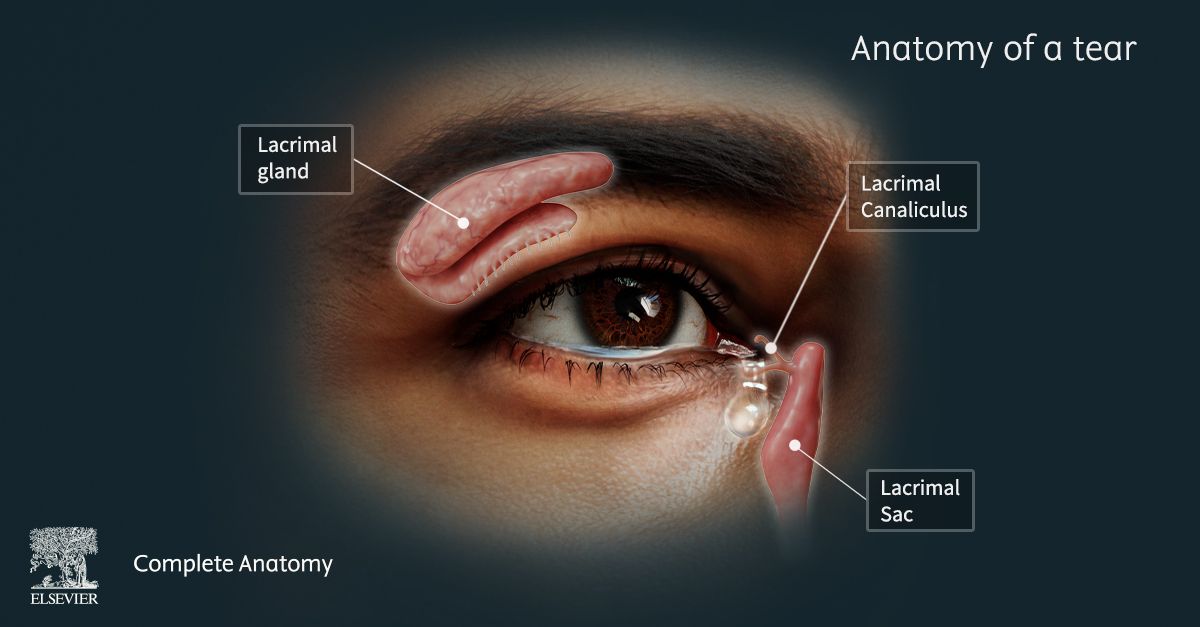
Anatomy of a Tear

Image of the eye close-up, showing where the lacrimal gland, lacrimal canaliculus and lacrimal sac are located.

Tears are essential for our eye health. This watery secretion contains several proteins, such as lysozymes and immunoglobulin A, which protect the surface of the eye from infection, while maintaining the hydration of the epithelial surface of the eye. The lacrimal gland is a lobulated exocrine gland that is responsible for producing tears. The gland […]Lire l’article

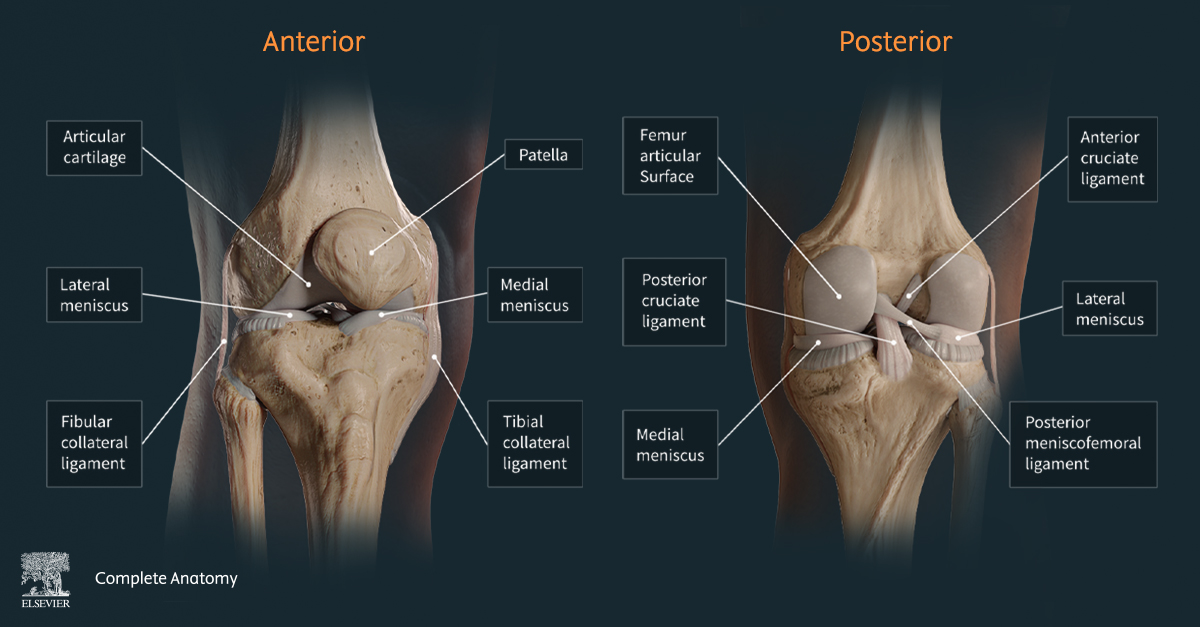
Ligaments of the Knee

Image of the ligaments of the knee

The knee joint is the largest joint in the human body. It acts as a hinge joint formed by the articulation of the femur, tibia, and patella. We use our knees to bend, straighten, and slightly rotate our legs as is essential for everyday walking, running, or jumping. The knee has four main ligaments. These […]Lire l’article

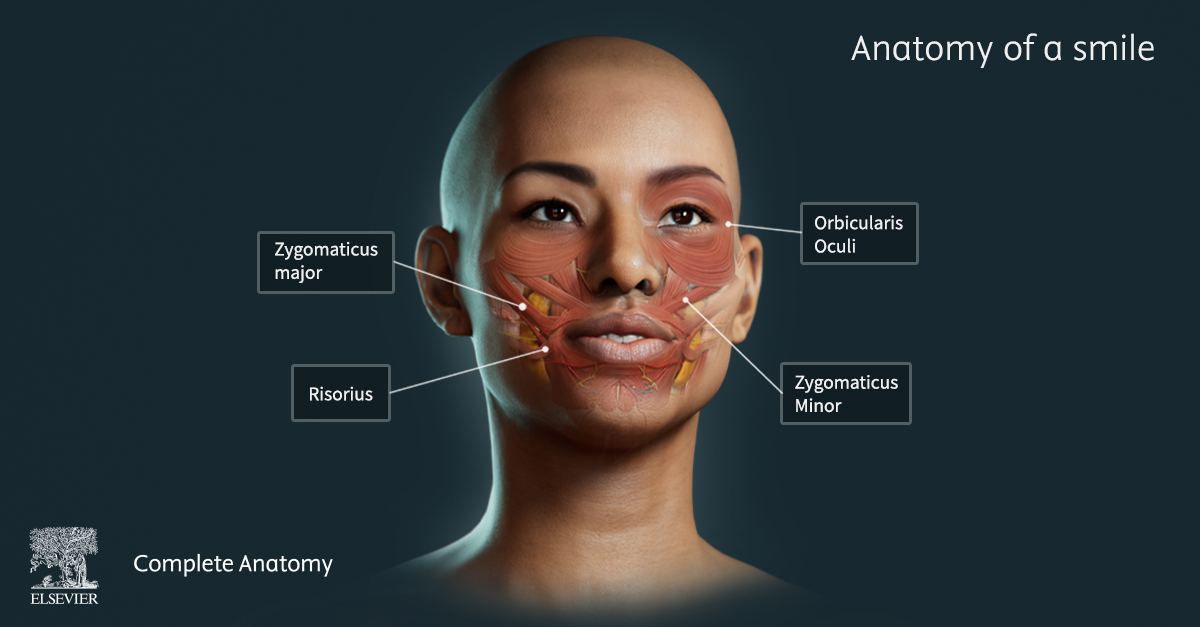
Anatomy of a Smile

Image of the anatomy of a smile

Infants first begin to smile consciously or socially between 6 and 12 weeks old. As we grow our smile changes. We develop teeth to replace gums. Those first set of teeth fall out to reveal our adult teeth. Sometimes those teeth may even go through changes such as braces, or maybe one day dentures. The […]Lire l’article

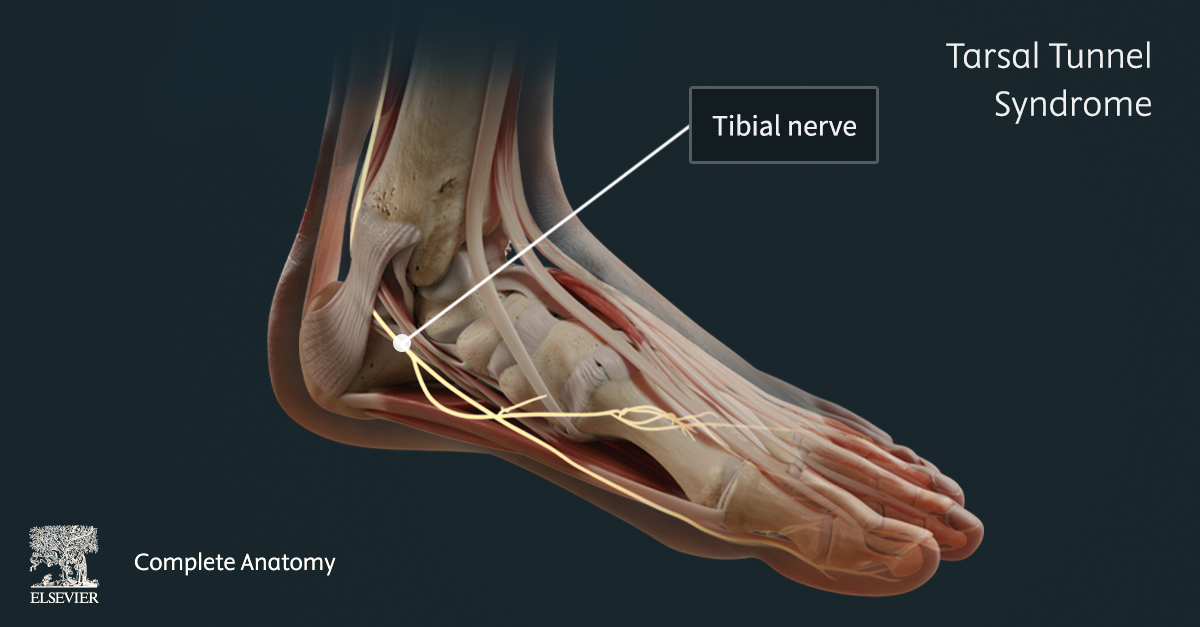
Tarsal Tunnel Syndrome

Image showing the foot with the skin faded to reveal the bones, muscles tendons and tibial nerve beneath.

Tarsal tunnel syndrome is a result of tibial nerve compression or damage at the tarsal tunnel.   The tarsal tunnel is a passage in the medial ankle. It is bounded by the flexor retinaculum of the ankle, the medial malleolus of the tibia and the talus and calcaneus bones. Several structures pass through the tarsal tunnel […]Lire l’article

Brain anatomy and Alzheimer’s

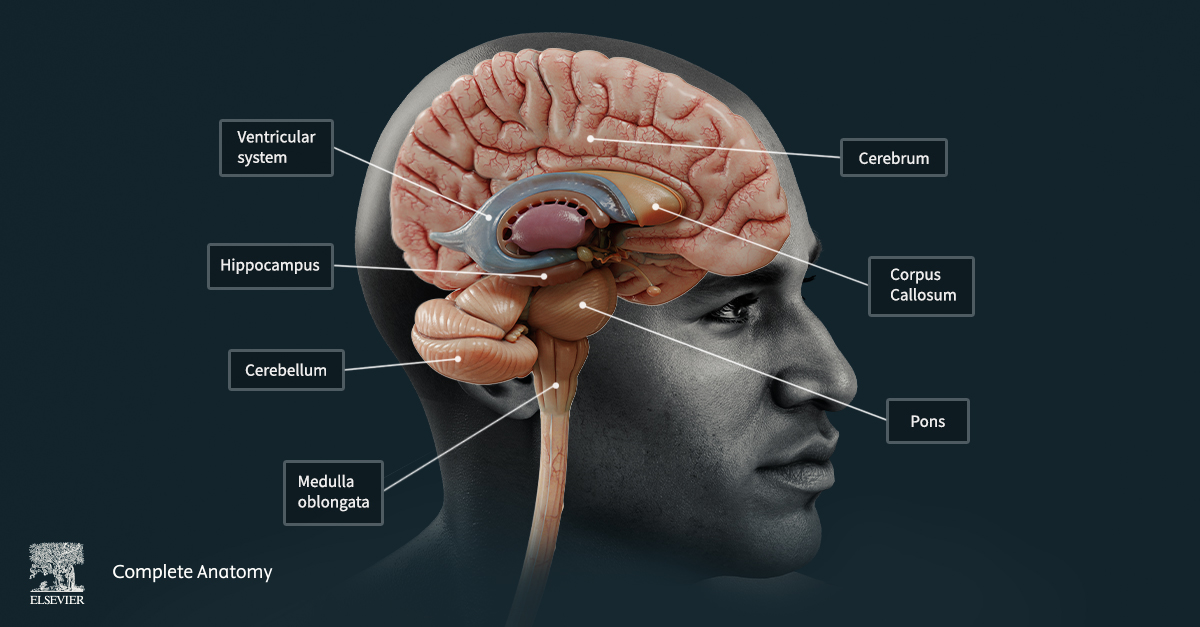
Mid-sagittal cross-section of the brain with various structures labelled including the cerebrum, corpus callosum, pons, ventricular system, hippocampus, cerebellum and medulla oblongata.

A great way to understand what Alzheimer’s and other forms of dementia are, is to first understand the basic anatomy of the brain.  The brain can be simplified into key structures. The cerebrum is the bulk of the brain. It can be divided into the frontal, parietal, temporal and occipital lobes as well as the […]Lire l’article

Muscles of the Back

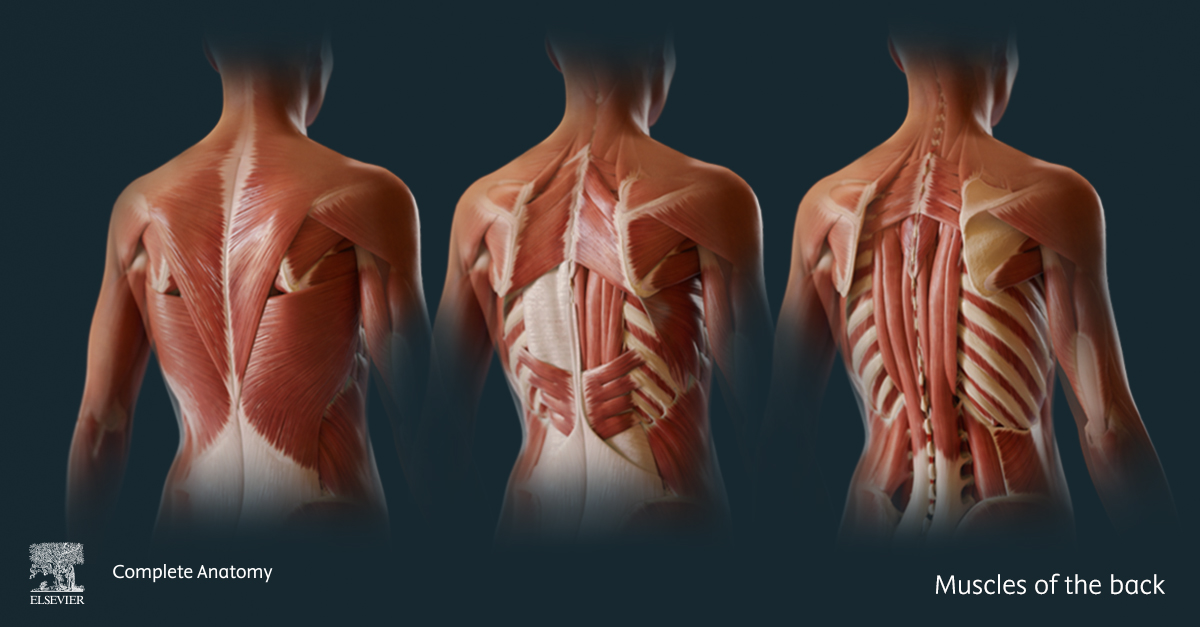
Three models showing the muscles of the back, including the superficial, intermediate and intrinsic back muscles

The muscles of the back include those that move the vertebral column, help maintain posture, and are involved in movements of the pectoral girdle and arm. The muscles of the back can be categorised into two main groups: the extrinsic and the intrinsic muscles.  The extrinsic muscles of the back are generally involved in movements […]Lire l’article

NEW: Access 3D Content Anywhere with Complete Anatomy for Web 

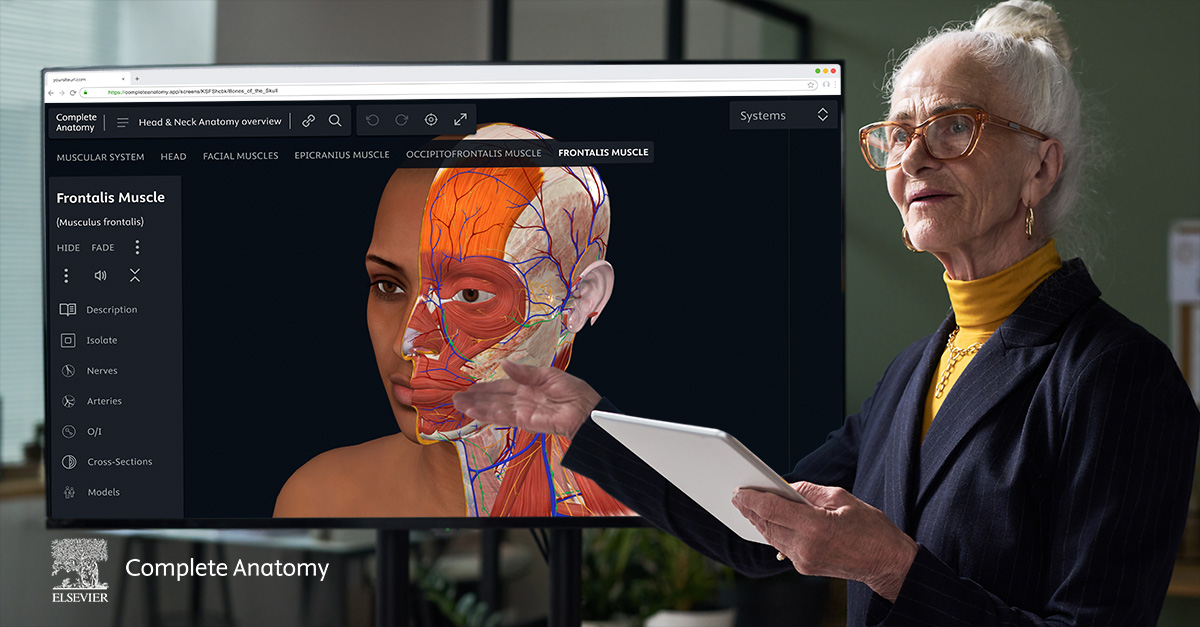
Visual of a female professor pointing to a screen featuring a dark-skinned female model head and neck that highlights the Frontalis Muscle

Introduction  We are thrilled to announce that Complete Anatomy is now available on the web for our institutional customers, a significant step forward in making our market-leading 3D anatomy models more accessible for educators and students alike. Now anyone with a browser and internet connection can conveniently access shared content—no app downloads needed!  Guided by […]Lire l’article

Anatomy Dissected: CNX (vagus nerve)

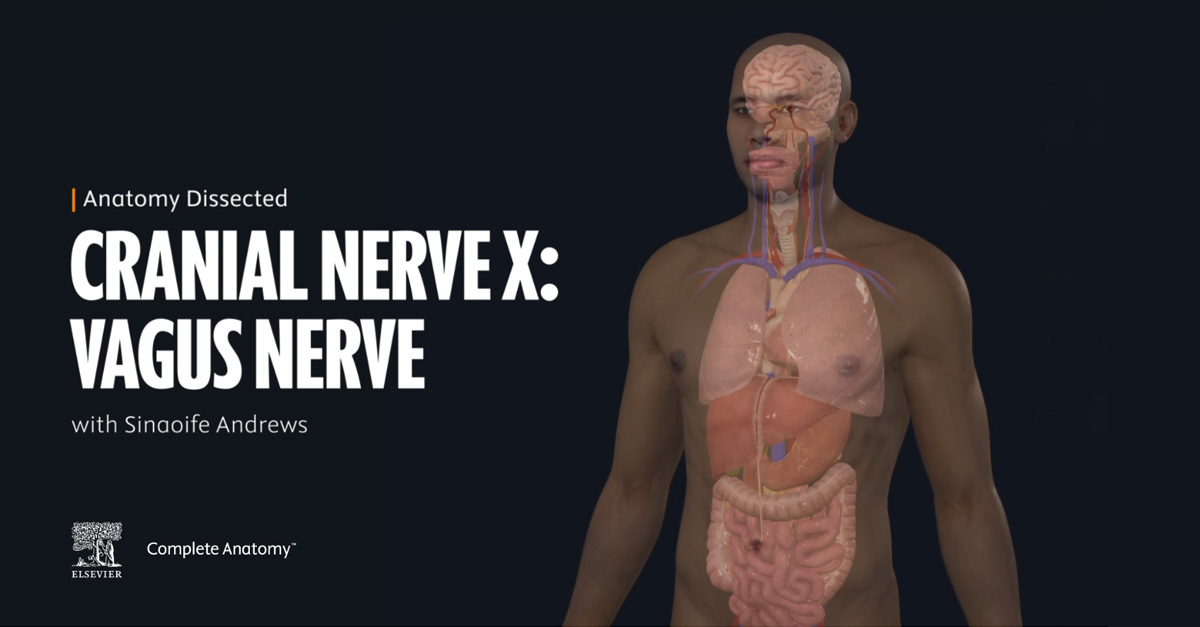
Cranial Nerve - Vagus Nerve

Welcome back to a brand-new episode of Anatomy Dissected! In this video, we will learn about the tenth cranial nerve, also known as the vagus nerve.  In this episode you will learn:  Check out all the Anatomy Dissected videos on our YouTube channel. Lire l’article

International Women’s Day 2025

Image of the faces of three diverse Complete Anatomy female models in celebration of International Women’s Day

This year, International Women’s Day is themed around ‘Acceleration Action’. This highlights the need of making moves and clear steps to obtain gender equality. We have made huge strides in this area in the past decade, but it is evident that there is still a lot of work to do. For example, according to an […]Lire l’article